Album: Wings of Deliverance
Artist: Sisters
Release Date: August 29, 2025
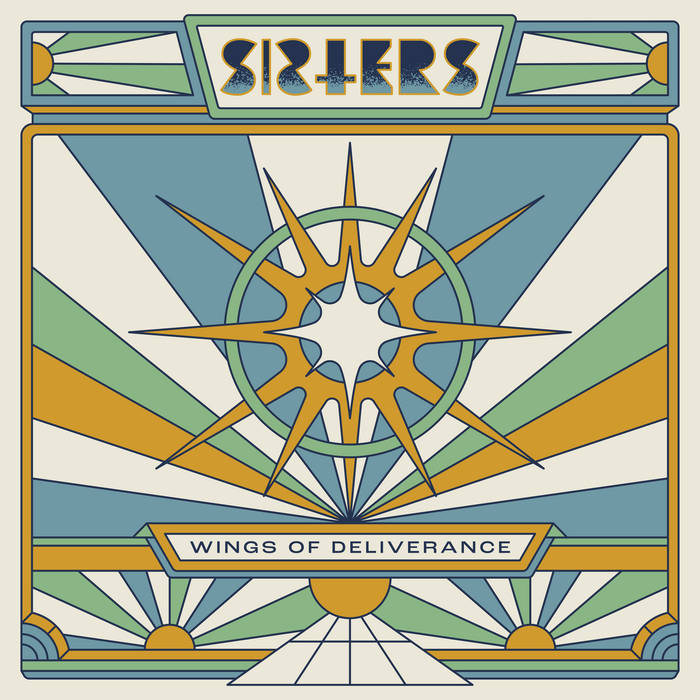 Wings of Deliverance – the second full-length album from California duo Sisters – is an explosive, doom-laden exploration of the Temple tragedy, considered by the band to be their definitive statement.
The album’s eight tracks skillfully and patiently weave together artisanally distorted timbres, artful repetition, brooding pacing, and destabilizing melodic figures which all serve to give the feeling of a tense, foreboding, forward trajectory.
Lyrically, the band shifts between an impressionistic, subjective interpretation of Jim Jones’ intentions and philosophy, outright quotations of Jones, and more general commentary. At certain moments, the sung lyrics are supplemented with or replaced by recordings of Jones speaking.
On the one hand, like many projects created about the Temple, Sisters focuses their attention almost entirely on Jim Jones, drawing him as a calculating, mesmerizing, brain-washing manipulator; there appears to be no discussion of or agency given to the thoughtful people who joined the group due to its very publicly-lauded social justice work.
On the other hand, what exactly is fair to ask of artists who are using their impression of an archetypal world event to filter/understand their own feelings of fear, confusion, and anxiety? I don’t know the answer to that, but I know that Wings of Deliverance feels like an entirely good-faith effort to earnestly contribute to a very, very complex, history-spanning, society-wide conversation.
For what it’s worth – and as one of those artists myself – it’s clear that, as outsiders, all of our understandings and interpretations are just varying shades of “wrong.” The hope, perhaps, is that something of value can be found in our attempts to publicly wrestle with the questions.
While Wings might be a bit challenging for listeners who haven’t spent a lot of time exploring musical genres specializing in heavier, pensive, repetitive ideas, I think approaching this music solely through the lens of the Temple might be entirely adequate to meaningfully connect with it. Much like my impression of the Temple itself, at once the album somehow manages to feel gentle, comforting, enveloping, enticing, disorienting, menacing, and, ultimately, apocalyptic.
(Joel Roston is the Music Editor for the jonestown report. His other articles in this edition are The Noise of the Death Tape, an interview with Death Potion, and Website Adds Page on Social Media Resources. A collection of his writings is here. He can be reached through his website.)