
Every surviving member of Peoples Temple – whether they were still members of the group on November 18, 1978, or whether they had left it in the months and years before the tragedy – has a unique story of their life inside. The story of Janet and David Shular, who left Peoples Temple in April 1977, is unlike that of most others because of when and why they left. Theirs is a mixture of uncommon serendipity and tangible knowledge that the couple had. That singular familiarity with the group provides a story of strength, perseverance, and emergence on the other side of a terrible storm within one’s life.
Janet’s Life Before Peoples Temple
Janet is a beautiful, intelligent African American woman who was born Janet Ruth Louden, on April 10, 1940 to a pastor in the African Methodist Episcopal church and his wife. Her father was active in the movement for social justice for African Americans, and Janet soon learned what it was to be an African American woman in this country. The desire to push for and achieve social justice has been present within her and is what has driven her to her many achievements. That desire is also what attracted her to Peoples Temple.
Janet began her career teaching elementary school in Indiana. As local steel mills began to cut jobs of the parents of her students, however, Janet saw her community face devastating poverty. She was inspired to learn about the federal Head Start program in order to help the families, and before long, she served as the administrator of the program even as she continued to teach.
Her work was emotionally difficult and stressful, but she didn’t mind it because it helped her to work towards making things better for those whom society had left behind. Janet was never one to shirk responsibility or leave things undone.
She would eventually move to Washington, D.C. to take another teaching position, but continued to serve as a Head Start administrator in her new home. During a vacation to California in the late 1960’s, she experienced the zeitgeist of the period that the state embodied, and decided to move to San Francisco, where she continued her work as an educator and Head Start administrator.
Janet’s Time in Peoples Temple
The political and social climate in the United States in the late 1960’s was, as Janet puts it, “a time of great upheaval. In California, there was great concern about police brutality, and there was also the ‘Hippie Movement’ among the youth that was pushing for change in how things were done in society.”
The first time she visited Peoples Temple was in 1967, when she accompanied a colleague to Redwood Valley to learn who Jim Jones was and what the Temple was all about. She recognizes the irony that she would go on to join the group, whereas her colleague went only the one time. “The country was very emotional in the late 1960’s,” Janet added, and “the assassinations of individuals such as JFK, RFK, MLK Jr. and Malcolm X had added a lot of trauma to the minds of Americans, both black and white.” Janet saw that Jim Jones and his church were focused on social justice, both by fighting for it in public and living it themselves within their organization. This deep commitment to social justice was exactly the sort of thing that was inculcated in Janet from her childhood through her work in schools in the eastern U.S.
Janet’s first job within the Temple was as “a greeter who would stand at the entry doors to Peoples Temple and say hello to everyone who came to the services, as well as answer any questions that newcomers might have.” She made a point of saying that she “did not screen” anyone who came to services; there were other members of the Temple who performed that function, making certain that no one who came would cause any trouble for the group. The greeter’s uniform comprised a light blue top and a dark blue skirt or pants.
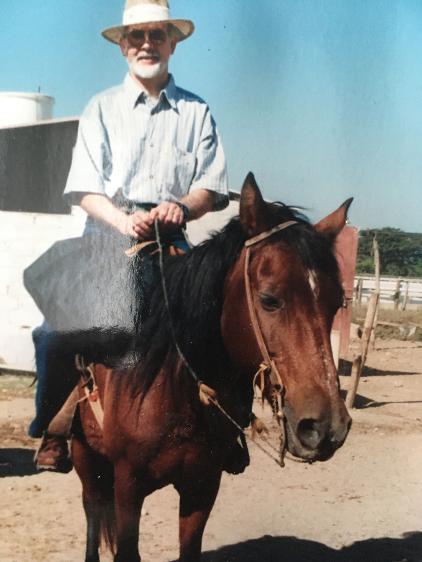
It was while she was “working the door” that she met David Shular, a white man who had grown up on a farm in Montana. They soon fell in love, and their marriage which began while they were still in the Temple, lasted nearly 35 years until David’s death on May 6, 2004. Together, Janet and David became foster parents for numerous children over the years up to the time of their departure.
Janet had several other jobs within the Temple, including acting as an envoy for the group, visiting the homes of potential members to learn of their backgrounds and their commitment to the church’s ideals. She also delivered money on behalf of the Temple to the self-described communist and political activist Angela Davis, and to Huey Newton’s mother during the Black Panther leader’s incarceration.
Some of Janet’s most cherished memories are those of her close friends from the Temple, including Glen Hennington, Juanita Harris, and Debbie Evans Harper. She also bonded with Laura Johnston, a young woman who came from a Quaker background that was as dedicated to social justice as Janet’s. Most importantly, she reconnected with Carolyn Looman, an old friend from her days in San Francisco education.
One relationship that proved invaluable was with Kay Curry, a member of the Temple’s Planning Commission who eventually assisted Janet in her escape from the group. Kay worked along with Janet with foster children and providing the youngest members of Peoples Temple with stable, loving homes and early education.
Each of her friends, Janet recalls, “was special in their unique ways.”
Many members of Peoples Temple gave up their single-family homes and lived communally, but Janet and David were allowed to maintain their own house. “Jim knew that I hated the idea of communal living a great deal, so much so that he knew I would leave Peoples Temple if he tried to make me live that way, so he just let it be.” Being allowed to have her own house made it much easier for Janet to have her foster children, and it would also become an asset when she and David decided to leave Peoples Temple. It was not a decision they made lightly.
In 1975, Jim Jones began making plans for a settlement for himself, his family and his congregation outside of the United States. Whether Jim was truly looking to create a utopia or whether he merely wanted to be away from the prying eyes of society is irrelevant. What was important was the site that Jim chose: an area of jungle in the South American country of Guyana. As Jones discussed the proposed site, alarm bells began to go off for both David and Janet. David had degrees in Geography and Earth Science, and he knew that the site that Jim had chosen for an agricultural community was not suitable for growing any type of crops. Janet remembers that David told her that “jungle soil didn’t have enough nutrients for farming. He knew that the heavy rains in the Guyanese jungles would wash away seedlings that the group planted.” Narrowing his knowledge down to a single sentence, David said of the proposed site, “You cannot farm the jungle.” Unable to sustain itself through farming, the community would have to bring in meat and produce from Georgetown at great expense. In that regard, the project was ill-fated from its inception.
Janet was also very concerned that things within Peoples Temple had become “more and more oppressive” as the group looked for a site to move to, and this frightened her. “Fear motivated me to consider our exit from Peoples Temple once the focus began to shift to Jonestown. Something very bad was coming, though I couldn’t say exactly what. As the preparations began to go to Jonestown, Jim began to move people from one place to another with a sort of emotional brutality that showed no concern for their lives. The pressure on those of us who were involved in planning the move to Guyana was just too much.”
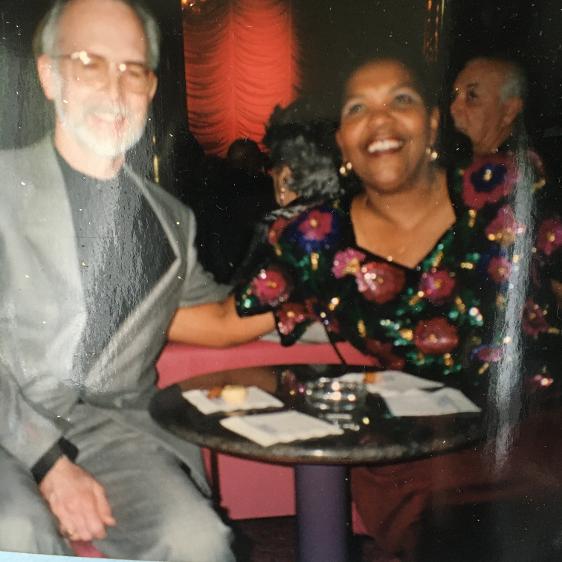 These were some of the factors that led to Janet and David to decide to leave Peoples Temple, but they also knew it was going to require a Herculean effort to do so.
The most immediate consideration, even before the couple could escape, was to secure the safety of their two foster sons so that they would be out of the group’s grasp. That meant Janet had to have the boys sent to her home state of Ohio, where they would have to remain for at least a year so that the Shulars could adopt them outright in the future. To do this, Janet called upon her friend Kay Curry, who had worked alongside Janet to foster children on behalf of the church. Kay understood where Janet was coming from, and she didn’t hesitate to facilitate the move of the two boys, even though the consequences for her could have been dire if Jim and the Temple leadership had discovered what was going on. Luckily, everyone was too busy focusing on the planning for Jonestown and getting started on the project to notice that things were changing in the Shular home. Janet and David continued to foster children in order to keep up appearances, but their hearts and minds were focused on finding their freedom from the group.
They began to slowly separate from the Temple, first by leaving the Planning Commission, which was laboring with the stresses of the anticipated move to Guyana. Janet also began sending money to her sister, asking her to hold on to it for her. When the Shulars bought a new station wagon, they hid it by parking it away from their house. And – yet again – Kay Curry was the one to help Janet get the clothes she would need once she left the Temple.
Waiting for the two boys to be cleared for adoption took some time, but Janet was able to speed the process up, by using some of the very contacts in government positions that she once used to advance the ideas and works of Jim Jones.
It was about this time that some Temple members realized that things were off with Janet. She was no longer enthusiastic in her activities at work or in services. Apparently, though, they thought that perhaps Janet was sick or upset about something that could easily be fixed. With the distraction of Jonestown – especially with rumors beginning to swirl about an article being published in New West magazine – everyone was far too preoccupied to see that Janet and David were about to leave.
On a Friday night in April 1977, David watched the Peoples Temple buses that famously travelled across the country leave for a scheduled trip. He then returned home, and he and Janet began to fill a rented U-Haul truck and their station wagon with as much of their belongings as they could. Other Temple members lived in a house two doors away, but they seemed to think that the couple was packing to go to Guyana, so they didn’t alert anyone what the Shulars were doing. As the sun rose the next morning, Janet and her family drove off, heading for their destination in Ohio.
The Escape, and Newfound Freedom
The Shulars’ flight from Peoples Temple did not go unnoticed – no one who left the group ever did so without Jim knowing and trying to find them. The Temple leader simply could not stand the thought of being left by any member of his congregation; he seemed to have an abandonment complex about it. But the only success that the Temple had in locating them was learning where David’s new place of employment was. From that tidbit, a member of the Temple – who worked for the IRS – was able to track them down to some degree, but the information wasn’t quite enough to reveal the Shulars’ exact location.
Meanwhile, New West magazine published its critical article in August 1977, despite Jim’s best attempts to stop it. Peoples Temple could no longer focus on the Shulars, as there was a new mandate from Jim that superseded all others: the membership of Peoples Temple had to move quickly to Guyana. Properties and belongings had to be sold as fast as possible, and the people had to be put on planes and flown down to the settlement. This sudden and all-consuming action stripped the Temple of most of its active membership in the United States, and no further attempt was made to contact the Shulars or to return them to the fold.
Janet and David Hear about the Tragedy
Janet heard nothing more, and life almost seemed to be back to normal until November 18, 1978. Janet rose early on the following day to get ready for the first family Thanksgiving they could attend in years. “I had a habit of opening the drapes first thing in the morning to let in the light,” Janet says, “but for some reason, I chose not to open them that day, even though I had ironing to do before we could get dressed.” She then turned on the television to listen to the morning news, as was also her daily habit. That was when she heard that something had gone terribly wrong in Jonestown.
Most of the people who had helped Janet and David leave Peoples Temple had done so as well, but there was one particular person that Janet cared about who hadn’t. As she thought about her friend and fellow educator Carolyn Looman, she remembered meeting her mother at some point along the way, and wondered if Carolyn might be with her now. “I immediately got out David’s atlas and looked at Ohio, trying to remember where exactly Carolyn was from. I began to make phone calls, trying to connect with someone in her family. I wanted desperately to speak with Carolyn’s mother. I finally managed to get in touch with her, and the first thing that she asked was if Carolyn was perhaps with me… because she knew that if Carolyn was with me, she would be safe.” Janet’s heart was shattered, since she had hoped the young woman was there with her family. But both Janet and Carolyn’s mother knew that Carolyn must have been in Jonestown, and that she was probably among the dead.
Among Janet’s memories of her friend was that of a beautiful ruby ring that Carolyn’s mother given to her. Janet felt real anger when she “thought of how Carolyn had given that ring, perhaps a family heirloom, to Peoples Temple to sell and use the proceeds for the church.” She knew Jim Jones and the Temple had taken so many things from parishioners over the years and sold them. “There was no justifying it.”
Each survivor has a different story of how they dealt with such an immense and terrible amount of grief. Janet says she “had cried a lot, over and over.
“I would discover the truth about events that had happened and that I thought I understood, and I would cry again. A lot of people [other family members of those who had died in Jonestown] were angry with those of us who left. I don’t think they understood that leaving Peoples Temple wasn’t easy, or that no one could be talked into leaving if they weren’t ready.”
For Janet, mourning the loss of those who died in Guyana “had nothing to do with Jim Jones.” Janet was grieving “those I had loved, and then there was the challenge I also faced every day, which was navigating through daily life after seven years living in the Temple and being out of society.

“I had been a professional before I joined Peoples Temple, so it was a bit easier for me to go back to work in Education. Other survivors, like Laura Johnston Kohl, had entered the Temple before establishing themselves in a career. People like that, like Laura, had it even worse for that reason. In Laura’s case, she had to go to a place of communal living before she could fully transition to the real world and deal with life in that world on a daily basis.”
The emotional toll of the tragedy is still there. “The passing of time hasn’t changed the intensity of the grief, it just diminishes the initial reaction of sadness. Newly learned about traumas push the older ones to the background for a while for me, but all the pain is still there. The new traumas come from learning about new travesties and miscarriages of justice with Peoples Temple that were committed by Jim Jones and others.”
Like most other survivors – and even those who research Peoples Temple – Janet has experienced that the reality of the events as the peeling of an immense onion, to use an old analogy. Regardless of how many years have passed, regardless of if an individual was a part of Peoples Temple or not, there are countless stories to catalog before anyone could possibly say they know the complete story of the Temple and its members.
Is there anything that can be learned from the experiences of the group that can be used to help future generations? Janet didn’t feel that she could speak to that question. In her mind, the vast number of experiences each individual experienced within Peoples Temple – or any other group, for that matter – makes the question “too broad of a topic” to elicit a cogent answer.
Moreover, there isn’t any way to amplify the good things that existed in the Temple, or conversely, to limit or eliminate the negative things. The question is irrelevant, Janet says, “because we no longer live in the sort of social and cultural atmosphere that Peoples Temple existed in.” In Janet’s opinion, the existence of Peoples Temple, of Jim Jones and Jonestown, are now “more like an Urban Legend than anything real that happened.”
One doesn’t have to look far to understand her viewpoint. Most Americans are familiar with the term “drinking the Kool-Aid” as a way of saying that someone has allowed themselves to be “brainwashed” into supporting an unreasonable position. But how many of those Americans know the origin of the phrase, or even anything about Peoples Temple and Jonestown? And those who do will no doubt refer to the group as a cult that died in a mass suicide somewhere outside the U.S., like in South America or Africa.
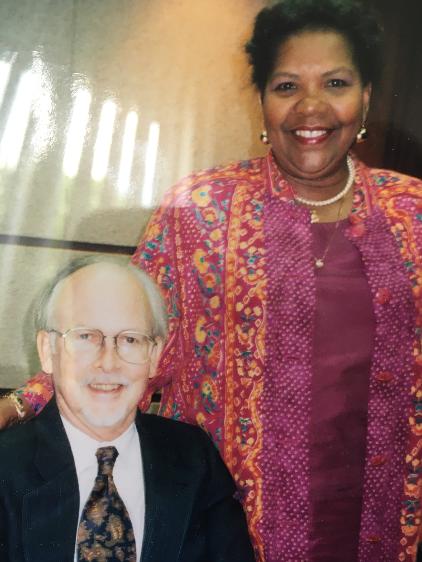
The experience of David and Janet Shular was with Jim Jones and Peoples Temple. They escaped at great risk to themselves, their family and friends. There was no way of truly knowing how far Jim might have been willing to go to track them down. Without the coincidental release of the New West article, things could have gone quite differently.
Janet knows that they were lucky to escape when they did. The greatest regret that she has is that she couldn’t help everyone else get out that she wanted to. The loss of Carolyn Looman still stings. Not being able to tell Carolyn’s mother that she was safe and with Janet is no less hurtful now than it was on the day after the deaths.
Even with this pain, though, Janet has found a way to keep moving forward, to continue with her life. She is both forever changed by her time in Peoples Temple, and forever grounded in her knowledge of herself as a person. Within her mind and actions now are her children and grandchildren, and that deep and complete dedication to social justice that first rooted itself in her when she was a child. She has found a way to thrive without forgetting what she went through as a part of Peoples Temple.
We all have to take the good with the bad, but some people, like Janet, have to deal with an inordinately large helping of the bad and painful things. It is how we deal with the dichotomy of these life experiences that define us and show the world what our strengths are.
Janet can be compared to Atlas, the Greek Titan charged by Zeus to bear the weight of the skies on his shoulders. That amount of weight was crushing him, keeping him frozen in place – so much so that he turned to stone. Janet carries the “two skies” of her life in Peoples Temple and her life outside of it. However, she continues to walk in spite of the weight upon her. She has refused to give up and stand still as so many others would do in a her place. She wasn’t made to stand still and lament – she is far stronger than that. Janet Shular dares to carry a burden, she lives with it as a part of herself, and she is fiercer for it.
(Bonnie Yates is a regular contributor to the jonestown report. Her previous articles may be found here. She may be reached here.)